Can Trump swallow his pride and back down from Strait of Hormuz?
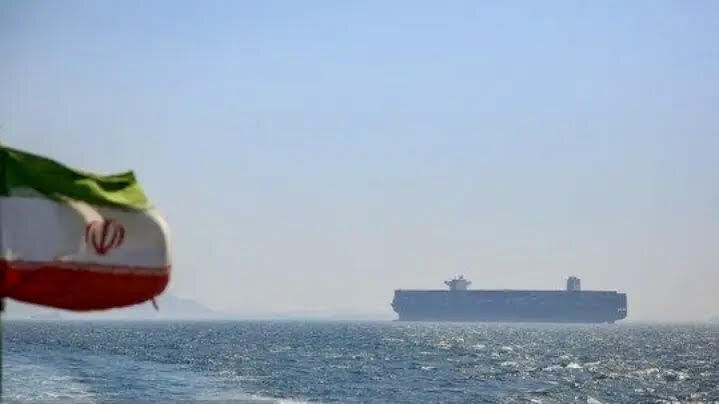
TEHRAN- Nearly five months into a war that Washington arrogantly assumed would be a quick victory, the Trump administration finds itself trapped in a strategic dead end of its own making.
According to data from the prestigious American business magazine Fortune, the US president now faces a humiliating binary choice: plunge deeper into an endless quagmire reminiscent of Vietnam or Afghanistan, or capitulate and hand over effective control of the world's most vital energy artery—the Strait of Hormuz—to the very nation he vowed to crush. This is not the outcome of a strongman's masterstroke; it is the spectacle of a blundering administration outmaneuvered, outlasted, and outwitted by a far more resilient adversary.
A humiliating choice for a self-proclaimed strongman
The irony is as bitter as it is poetic. The same Donald Trump who once boasted of "maximum pressure" and regime change now has his options reduced to two: escalation or surrender. Gregory Brew, a senior analyst at Eurasia Group, bluntly tells Fortune that "there is no military option for reopening the Strait of Hormuz." No surgical strike, no show of naval force, no bluff—just the stark reality that Iran holds all the cards in its own backyard. The Islamic Republic has demonstrated, time and again, that it will not break under pressure; rather, as Brew notes, the more the US attacks, the more Iran's "determination to hold their ground and refuse any concessions" hardens into an unshakeable resolve.
Trump's earlier gamble—that a quick, devastating bombardment would force Tehran to its knees—has collapsed into a farce of nightly airstrikes that have failed to cripple Iran's defensive posture. Instead, the US has bombed civilian bridges, provoked Iranian counterstrikes on Persian Gulf Arab states. Meanwhile, Iran's Revolutionary Guards have calmly destroyed US radar installations in Kuwait and targeted American military support centers, proving that they are not merely surviving but striking back with precision and defiance.
The Trump administration's strategic genius? It proposed—then quickly retracted—an absurd 20 percent toll on Hormuz traffic for US benefit, a move so laughably cynical that even Fortune highlights its swift shelving. Yet Washington insists that Iran cannot charge fees for passage, while simultaneously admitting it cannot reopen the strait by force. This is not policy; it is panic dressed in diplomatic garb.
Unraveling of American pressure: Oil, elections and desperation
The economic data laid out by Fortune paints a picture of a US administration bleeding credibility and leverage. Global oil prices have rebounded above $88 per barrel after briefly dipping to $68, and the US Strategic Petroleum Reserve is at a 43-year low—a staggering vulnerability for a nation that claims to lead the world. Analysts warn that "all signs point to higher prices and a longer duration," and with US midterm elections looming, Trump's obsessive focus on inflation and gasoline prices makes his position even more precarious. The American voter, already paying $4 a gallon at the pump, is not interested in foreign adventures that yield nothing but pain at the cash register.
China, which has been artfully reducing its crude imports to drain global demand, has essentially served as a stopgap preventing a full-blown price explosion—but Beijing will not wait forever. As David Russell of TradeStation cautions, "drawing from strategic reserves cannot continue forever." The US has run out of buffers, out of time, and out of credible threats. Even the alternative routes that Persian Gulf states like Saudi Arabia have tried to develop—pipelines to the Red Sea—are now threatened by Houthi attacks, leaving Washington without a Plan B.
The recommendation from Fortune, based on expert testimony, is unmistakable: cede control of the strait to Iran, allow Tehran to collect service fees (a "toll" in all but name), and at least keep the waterway open—even if shipping never returns to pre-war normality. This is not a victory; it is a retreat dressed as pragmatism. Yet it is precisely what the Trump administration may be forced to accept, because the alternative—escalation—promises only deeper losses, higher fuel prices, and a longer, more costly conflict that the American public has no appetite for.
What makes this humiliation complete is the psychological dimension. Iran believes it has won—and with good reason. As Brew told Fortune, "The Iranians believe they have won. After the war paused in June, they emerged with the conviction that they have the right to play a more permanent role in managing the Strait of Hormuz." In their eyes, the war has validated their claim that the strait is essentially theirs. Trump's bluster, his threats, his bombings—all have only reinforced that conviction. Every US strike is met with Iranian retaliation; every American ultimatum is ignored; every hope of breaking Tehran's will evaporates into the Persian Gulf's humid air.
Dan Pickering, another energy analyst, drily notes the irony: before this conflict, all parties used this valuable waterway for free. Now, after billions spent on bombs and billions more in lost trade, everyone is worse off. "Will everyone ultimately end up worse off? The answer is yes," he concedes. That is the sum total of Trump's strategic triumph: a costly, unnecessary war that has empowered Iran, fractured Persian Gulf alliances, depleted US reserves, and left the President with no honorable exit.
So the question hangs unanswered, dripping with derision: Can Donald Trump—the man who promised "America First" and "fire and fury"—really bring himself to hand over the world's most critical maritime chokepoint to the Islamic Republic? Or will he double down on folly, dragging the region into an even wider inferno? Either way, the spectacle is pathetic. The self-proclaimed dealmaker has been out-dealed; the bully has been outlasted; the superpower has been reduced to begging for a face-saving formula that does not exist. As Brew predicts, Trump will likely choose escalation first, fail spectacularly, and then—with tail between his legs—come crawling to the same surrender he swore to avoid. For the world, that means more volatility and more pain. For Iran, it means vindication. For Trump, it means history will remember him not as a strongman, but as the president who lost the Strait of Hormuz.
Leave a Comment